How Online Fight Fans Hijacked Sports
Media Coverage
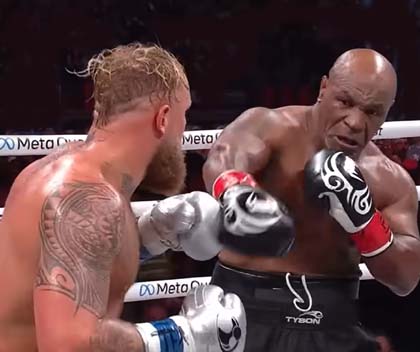
When 60 million households tuned in to watch Jake
Paul fight Mike Tyson on Netflix last month, they weren't just watching a boxing
match. The streaming platform announced a record 60 million households tuned in,
peaking at 65 million concurrent streams, but the real action happened on social
media.|
The fight was subject to a host of memes on social media from fans trying to
watch, with viewers joking about the poor quality of the stream and the overall
quality of the fight. So, within hours, bigger sports outlets weren't reporting
on the fight itself -- they were reporting on what fans said about it.|
Yet, such a turn isn't specific to celebrity boxing matches -- across UFC,
boxing, and MMA, fan discussions now control media coverage more than the actual
fights do. News media coverage of the incident was minimal until some social
media users made the story recognizable through their constant discussion of the
case. Sports journalists who once relied on press conferences and official
statements now refresh Twitter every few seconds, watching narratives form in
real time.
Take Dana White, UFC's president -- he figured this out years ago. He usually
makes tweets that announce new fights, signings, and other breaking UFC stories,
completely bypassing regular media. So, when White tweets, millions see it at
the same moment -- and by the time ESPN reports it, fans have already made
memes, started arguments, and moved on to the next controversy.
Reddit has become particularly powerful in making fight narratives. Reddit MMA
streams function as an online crossroads where fans come to share live links to
fights, full fight analyses, and some amazing discussions about everything that
happens in the octagon. A technical observation from a random Redditor at 2 AM
can become tomorrow's headline story. Such communities usually spot trends and
storylines that professional analysts miss.
The numbers are clear -- 27% of sports fans watch TV sports channels each week,
while 23% stream online, but even these statistics miss the bigger picture.
Millions more follow fights exclusively through social media clips and
discussions. Well, they never buy pay-per-views or watch full events, yet they
know every controversy, every beef, and every knockout because Twitter and
TikTok feed them constant updates.
Fighters themselves fuel all that -- the hottest Twitter feud currently is
Dustin Poirier's accusation of Conor McGregor's empty promises. Such online
conflicts bring more coverage than most actual fights. Smart fighters know that
starting Twitter beef or posting controversial takes drives more attention than
winning in the ring. Internet beef typically begins with one party posting a
critique or shade -- maybe a tweet accusing another brand of copying a design or
an Instagram story calling out poor customer service, and fighters have mastered
this art.
But for all those fans who want to capitalize on all these fast turns, having
the right tools is extremely important. When fighter drama explodes on Twitter
at midnight, odds can change way before regular bookmakers even notice. So,
reliable
betting apps
may help you make quicker decisions
based on breaking news and viral moments. Gambling expert Wilna van Wyk has
reviewed the best ones available, focusing on every detail, such as the fastest
updates, best odds, and smoothest user experience -- you need to act fast when
social media changes everything about a fight in seconds.|
The Jake Paul phenomenon perfectly proves this new reality -- metrics such as
ticket sales, pay-per-view purchases, social media engagement, and media
coverage were tracked to optimize strategies and skyrocket ROI. Promoters now
seek viral moments -- so, a slap at a weigh-in that brings 100 million views is
more important than selling out an arena. Paul understands this -- every move he
makes is set to make shareable content first, and sporting achievement second.|
Platform changes accelerate these trends -- and Twitter/X has experienced the
biggest one: posting has
flipped nearly 50 percentage
points from Democrats to Republicans.
Different political tribes have different stories about the same event. A single
knockout punch spawns completely different stories depending on which corner of
social media you inhabit.
Female fighters particularly benefit from fan-powered coverage. Fans have
started viral campaigns to support their favorite female athletes and teams,
asking for more media attention and better sponsorship deals. So, when regular
media ignored women's MMA, fans forced the conversation through a huge volume of
posts and engagement. Now, women's fights regularly headline major cards because
social media metrics proved the audience existed.
Young fighters treat social media as seriously as training. Coming across as
just another one of your buddies who is coming over to watch the pay per view,
Suarez's willingness to engage with fight fans keeps her pretty much undefeated
in the Twitterverse. Well, those who master online engagement see dramatically
different coverage than those who stay offline. Media outlets now assign
reporters specifically to watch over fighters' social accounts, knowing news
breaks there first.
According to the young people we interviewed, four social media features in
particular escalate conflicts: comments, livestreaming, picture/video sharing,
and tagging. All these features turn fights into 24/7 entertainment products.
The actual fight lasts 15 or 25 minutes, but the social media spectacle runs for
months -- fans make more content about fights than promotions ever could,
keeping audiences engaged between events.
Regular journalists now spend as much time analyzing Twitter reactions as
watching fights. Beat reporters monitor Discord servers and subreddit
discussions for story angles. The most successful sports media personalities
maintain massive social followings themselves, knowing that credibility means
being part of online discussions.
But this isn't ending anytime soon, and each bigger fight brings some new ways
online discussions shape coverage -- the line between watching fights and
discussing them keeps disappearing.