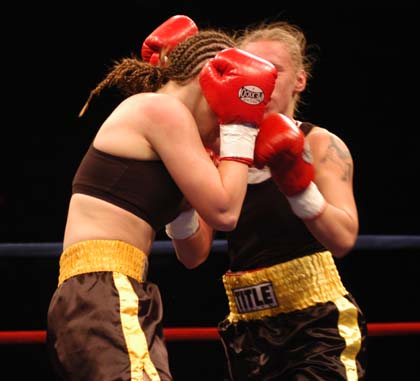
Why Women Boxers Are Rarely Allowed to Be Ordinary
(JAN 26)
Women’s boxing has always been framed as exceptional before it has been allowed
to be normal. From its earliest appearances, the sport has been narrated through
novelty, resistance, and justification. A woman who boxes is rarely introduced
simply as a professional athlete doing her job. She is a symbol, a statement, or
a disruption. The space for the ordinary has been consistently denied.
This pressure is subtle but persistent. Male boxers are permitted anonymity
within the ranks. They can be journeymen, late bloomers, contenders who never
quite arrive. Women boxers are rarely afforded the same range. Their careers are
framed as either historic or incomplete, groundbreaking or disappointing. The
middle ground, where most sporting lives actually exist, is largely ignored.
Part of this comes from the sport’s uneven history. Women boxed for decades
without consistent recognition, regulation, or record keeping. When visibility
finally arrived, it arrived compressed. Generations of fighters were folded into
a single narrative of arrival. That compression left little room for gradual
progression or unremarkable careers. Everything had to matter immediately.
In the modern landscape this expectation has only intensified where broadcast
language sponsorship framing and
in play
betting shape how fights are discussed
and consumed reinforcing the idea that every appearance must carry consequence
beyond the ring.
The Burden of Representation
Women boxers are often asked to represent more than themselves. A single bout is
treated as evidence of progress or failure for the entire sport. A loss is
rarely allowed to be instructional. It becomes symbolic. This is not an
environment that tolerates ordinariness.
For male fighters, a setback can be reframed as development. For women, it is
often positioned as a limitation. The margin for error is narrower, not because
the athletes are less capable, but because the narrative space around them is
smaller.
This burden extends beyond results. Appearance, personality, and marketability
are scrutinised alongside performance. The expectation is not just to win, but
to justify attention. That is a weight few male fighters carry in the same way.
Careers Without Room to Breathe
Most professional boxers build their careers slowly. They learn how to fight
gradually over time with small progressive improvements and experience multiple
fights in which some are neither successful nor disastrous. Although these types
of fights help them personally and are crucial to an individual boxer, they
typically do not carry any significant value externally. In the past, female
boxers have not been allowed to follow the same course of gradual development
that male boxers have taken.
With the limited number of opportunities available for women boxers and the
unrealistic expectation of immediate readiness placed upon them, the value of
having gone through the developmental years (before a female fighter was in the
limelight) has been diminished and critiques of a woman's performance have been
rushed and unbalanced.
As a result, many have been evaluated on their highest successes only, rather
than their long-term development. An absence of a signature fight (or moment)
that defines who a female fighter is viewed as indicative of being unsuccessful.
Ordinary Does Not Mean Unimportant
Ordinary fighters are the backbone of any sport. They populate undercards, test
prospects, and sustain gyms. They create context. Women’s boxing has always had
these fighters, but rarely acknowledged them.
When coverage
focuses exclusively on champions, pioneers, sex and race, it
erases the ecosystem that allows those figures to exist. The fighters who
compete steadily, improve quietly, and never headline are treated as footnotes
rather than participants.
This absence distorts understanding. It suggests that women’s boxing exists only
at its extremes. In reality, it is sustained by the same range of careers found
in any established sport.
The Language That Shapes Expectation
How women boxers are discussed matters. Descriptors like trailblazer and history
maker are powerful, but when applied universally they become limiting. They
flatten individuality and deny variation.
The language surrounding women’s boxing often frames participation itself as
achievement. While this reflects historical barriers, it also traps current
fighters in outdated expectations. At a certain point, progress requires
normalisation.
Being allowed to be ordinary is not a diminishment. It is recognition of
legitimacy.
Why Normalisation Is Still Resisted
There is discomfort in treating women’s boxing as routine because routine
implies permanence. It suggests the sport no longer needs defending. For
institutions built around advocacy, this can feel like loss rather than success.
Media outlets, promoters, and even fans sometimes struggle to let go of the
exceptional framing. It has become a habit. But habits that once protected the
sport can later constrain it.
Normalisation requires confidence that women’s boxing will endure without
constant justification. That confidence is still uneven.
The Cost to the Fighters
When fighters are denied ordinariness, the cost is personal. Careers become
compressed into moments rather than journeys. Pressure intensifies. Enjoyment
diminishes.
Many women boxers speak privately about wanting to be judged like everyone else.
On preparation. On consistency. On growth. These are reasonable desires in any
professional environment.
Until that shift occurs, women’s boxing will continue to carry an unnecessary
weight, even though the
elite high performance athletes are there in-waiting.
Making Space for the Middle
The future of women’s boxing depends not only on stars, but on depth. That depth
cannot exist without acceptance of the ordinary. Fighters must be allowed to
have unremarkable nights, gradual progress, and careers that matter without
being historic.
Ordinary is where sustainability lives. It is where sports mature.
Women boxers are rarely allowed to be ordinary because the sport is still
learning how to trust its own permanence. When that trust arrives, the need for
constant exceptionalism will fade. What remains will be something stronger. A
sport confident enough to let its fighters simply be what they are.