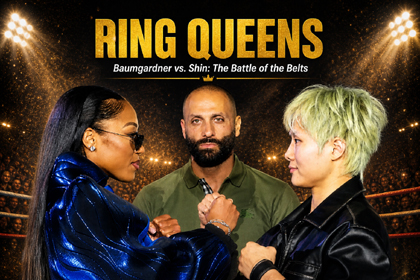
Alycia Baumgardner vs Bo Mi Re Shin, April 17
2026: Title Defense Breakdown and Tactical Analysis
May 5, 2026
Alycia Baumgardner vs Bo Mi Re Shin became a clean
data fight rather than a chaos fight. Baumgardner retained her unified WBA,
WBO and IBF junior lightweight titles at The Theater at Madison Square
Garden on April 17, winning by unanimous decision with cards of 98-92, 98-92
and 99-91. This was not a WBC title defense: the
WBC's own notice
says Baumgardner vacated the WBC super featherweight title in September 2025
after winning it in 2021 and defending it six times.
The boxing record tells the surface story. Baumgardner moved to 18-1, 7 KOs,
while South Korean challenger Bo Mi Re Shin fell to 19-4-3, 10 KOs after
a brave but outgunned challenge. Women’s boxing got a high-visibility main
event, and the punch stats backed the scorecards.
What This Fight Means for Women’s Junior
Lightweight
WBC Title Implications and Rankings Movement
Baumgardner no longer holds the WBC belt, but her performance still affects the
junior lightweight hierarchy because she owns three major titles and The Ring
recognition at 130 pounds. The WBC vacancy changed the belt map, not her
division status. A champion who beats Shin by wide decision still controls the
best commercial route at junior lightweight.
The wider rankings picture is also shaped by name demand. After the fight,
Baumgardner pushed toward Katie Taylor and Amanda Serrano-level opponents, while
dismissing Caroline Dubois as a target. That tells the division what her team
wants next: not a soft defense, but a bigger women’s boxing platform.
Baumgardner’s Defense Record: Streak and Pattern
Baumgardner’s title pattern is clear: fewer stoppages, more control. Sky Sports
noted that the Shin win extended her record to 18-1, but also kept alive a
five-year knockout drought. That is not automatically a flaw; it reflects a
shift from pure explosion into ring generalship, distance control and
round-by-round scoring.
Her WBC history still matters. Baumgardner won the green-and-gold belt by
stopping Terri Harper in 2021, defended it six times, then vacated it in 2025 to
continue a different title route. Against Shin, the defense count applied to the
WBA, WBO and IBF belts, not the WBC line.
Tactical Breakdown: Styles Make Fights
Baumgardner’s Pressure Fighting and Power Statistics
Baumgardner fought from an orthodox stance and used pressure without rushing.
She did not need southpaw angle tricks or wild volume; she stepped in behind the
jab, froze Shin with feints, then landed the cleaner right hand and left hook.
The CompuBox sheet shows why the judges had little room for debate: Baumgardner
landed 279 of 718 total punches, a 38.9% connect rate.
Power was the gap. Baumgardner landed 180 of 388 power punches, a 46.4% rate,
while Shin landed 138 of 504 at 27.4%. That means Baumgardner did not just throw
better; she selected better.
Bo Mi Re Shin’s Technical Approach and Range Game
Shin’s problem was not courage. It was efficiency. She threw 693 total punches,
nearly matching Baumgardner’s output, but landed only 164, and her jab connected
at 13.8%.
The South Korean challenger had moments when she forced exchanges, especially
when she stepped in with the right hand and tried to back Baumgardner off the
centre line. But her range entries were too readable. Once Baumgardner timed the
second step, Shin had to work harder for every clean touch.
CompuBox Metrics and What the Stats Predict
| Fighter |
Reach |
KO% |
Jab Accuracy |
Defense% |
| Alycia Baumgardner |
66 in listed |
36.8% after 18
wins, 7 KOs |
30.0% |
76.3% |
| Bo Mi Re Shin |
N/A publicly listed |
52.6% after 19
wins, 10 KOs |
13.8% |
61.1% |
Defense% here is calculated from opponent total
connect rate. Shin landed 23.7% of her total punches, so Baumgardner’s
defensive rate sits at 76.3% by that measure; Baumgardner landed 38.9%,
leaving Shin at 61.1%. The method is blunt, but it explains the fight
better than reputation.
The numbers also show why boxing streams and live cards told slightly different
stories. Shin stayed busy enough to look competitive in bursts, but Baumgardner
banked cleaner minutes. Judges do not score bravery unless it lands.
Head-to-Head Attributes Comparison
*Speed: Baumgardner had the faster first counter and cleaner
exit
step.
*Power: Baumgardner’s power punches landed at 46.4%, which
separated the scorecards.
*Chin: Shin absorbed flush shots and stayed upright for all
10 rounds.
*Experience: Baumgardner’s championship rounds showed in her
pacing and recovery after Shin’s rallies.
*Footwork: Baumgardner controlled the centre more often;
Shin
followed lines rather than cutting them off.
*Ring generalship: Baumgardner dictated where exchanges
happened, especially after the fourth round.
The venue mattered too. The Theater at Madison Square Garden gave the bout a
compact, loud setting, and the card marked a major U.S. women’s boxing push
under Most Valuable Promotions. Baumgardner handled that stage as the A-side.
Odds and Market Sentiment Before the Bell
Pre-fight markets leaned toward Baumgardner because of title experience, power
history and cleaner top-level résumé. Tanzanian boxing fans following live odds
could track price movement through the
top sportsbook in Tanzania,
but the useful angle was not blind favourite bias. It was round betting,
decision pricing and whether Shin’s pressure could steal enough middle rounds to
tighten the cards.
Mobile viewing changed the rhythm of the fight for late-night audiences in Dar
es Salaam, Arusha, and Mwanza as fans moved away from traditional television.
Modern viewers in Tanzania increasingly rely on multi-layered interfaces where
legal boxing streams and round-by-round cards coexist on a single device.
Looking at the digital context of these broadcasts reveals that a
BetWay
login allows fans to monitor live odds updates without disrupting their
observation of the ring action. This seamless integration of data has
transformed the way the sport is consumed during major international events. The
fight itself still came down to connect rate, power punches landed, and whether
Shin could disrupt Baumgardner’s lead-hand control.
Beyond the Bell: Choosing the Right Boxing Gloves
The power statistics in this fight underscore the critical role of equipment.
Alycia Baumgardner’s 46.4% power connect rate was landed with regulated,
typically 10oz, professional boxing gloves required for championship matches.
For anyone inspired by the technical display, selecting the right gear for
personal training is the first step. Training gloves for bag work or sparring
range from 12oz to 16oz, offering crucial wrist support and protection as you
develop the precision seen in elite junior lightweight contests.
From Spectator to Boxer: Finding Quality Boxing Classes
The tactical depth of Baumgardner’s ring generalship, which dictated where
exchanges happened, is a skill learned through structured practice. For those
moved by the women’s boxing platform and looking to engage directly, enrolling
in quality local boxing classes provides the necessary foundation in footwork,
distance control, and proper technique. These classes translate the high-level
concepts of professional fights, such as feints and controlling the center line,
into practical lessons in fitness and self-defense.