(MAY 19) PORTLAND, OR — Long
before women’s boxing achieved global main-event status, a
fearless group of athletes in the 1970s and 1980s fought through
immense social, legal, and institutional barriers to pave the
way for the sport's future. Operating in an era where women were
frequently denied official professional licenses, these
trailblazers frequently relied on exhibition matches to showcase
their skill, heart, and right to compete. Today, the
Women Boxing Archive Network (WBAN)
and the International Women’s Boxing Hall of Fame (IWBHF) honor
the rich, often uncredited history of these foundational ring
warriors.
The
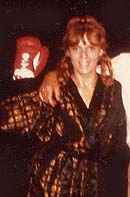
Ring Legacy of Sue TL Fox
Among the
premier fighters of this golden era of pioneers was Sue TL
Fox (originally known in the ring as "Tiger Lily"), a
world-class welterweight who rose to become the #1 ranked
fighter in the world in 1979. Before her storied post-boxing
careers as an undercover drug detective and professional
musician, Fox broke ground as the first licensed female boxer in
the state of Washington (1976), Montana (1976), and Utah (1977).
Because
sanctioned opportunities were sparse, Fox's career was defined
by tough competitive bouts and high-profile exhibitions:
·
The 1976
"Exhibition" Mismatch:
On February 12, 1976, a young Fox was misleadingly booked
against Theresa “Red Star” Kibby. Despite Fox having minimal
boxing training, she stayed on her feet through a brutal
onslaught until the referee stepped in. Subsequent research by
WBAN confirmed the bout was
unsanctioned by the state athletic commission, officially
rendering it an exhibition.
·
The "Tomorrow
Show" Exhibition:
In July 1977, Fox and fellow pioneer Gwen Gemini took women's
boxing to national television, performing a widely watched
four-round sparring exhibition on NBC’s The Tomorrow Show
with Tom Snyder.
·
The Lake
Tahoe Battle: In
February 1977, Fox shared the ring with Gwen Gemini in Lake
Tahoe, Nevada. Though local newspapers prematurely reported it
as a scored bout, official verification later proved the Nevada
Athletic Commission had no record of it, identifying it as a
four-round public exhibition.
·
The Historic
Draws: Fox fought
to highly publicized, action-packed draws against top-tier
opposition, including a "Fight of the Month" performance against
Lavonne Ludian at the Sahara Tahoe, and a fiercely contested
battle against Las Vegas native Darlene Arnold.
Icons
of the Era: Trailblazers and Advocates
Fox was
flanked by a generation of fiercely determined women who used
exhibitions and legal challenges to force state athletic
commissions to acknowledge them:
·
Marian "Lady
Tyger" Trimiar: A
fierce Bronx-born fighter, Trimiar fought in countless
exhibition matches in the early 1970s before women's boxing was
legalized. After winning a landmark legal battle to get licensed
in New York, she captured the women's world lightweight
championship in 1979 and famously staged a month-long hunger
strike in 1987 to advocate for equal pay.
·
Cathy "Cat"
Davis: One of the
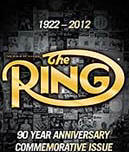
most visible media icons of the 1970s, Davis brought widespread
mainstream attention to the sport, notably becoming the first
female boxer to grace the cover of The Ring Magazine.
·
Jackie
Tonawanda: Dubbed
"The Original Challenger," Tonawanda was a regular fixture in
high-profile events and a vocal advocate who challenged the New
York State Athletic Commission for the right to box.
·
Shirley
"Zebra Girl" Tucker:
Regarded as one of the most technically gifted fighters of her
era, Tucker took on the California Athletic Commission to push
for longer rounds and broader competitive recognition.
·
Graciela
Casillas & Sue "KO" Carlson:
Driving legitimacy through pure athletic dominance, Casillas
brought elite tactical skill to the ring, while Carlson defended
her super-lightweight crown in 1981 in the sport’s very first
scheduled 15-round female pro fight.
Preserving the History
The
struggles of these women—who routinely braved public scrutiny,
unfair purse structures, and administrative resistance—laid the
bedrock for the multi-million dollar modern landscape of female
combat sports. To ensure their efforts are never forgotten, Sue
TL Fox established WBAN in 1998, which remains the global
authority on historical female boxing records.