(SEPT 21) On September 21, 1904, the modern
Olympic Games in St. Louis, Missouri, hosted a spectacle that was both a century
ahead of its time and deeply rooted in the era's carnival atmosphere. Amid the
heat of the World’s Fair, a small group of women stepped into the boxing ring.
Full Story on WBAN Historical website.
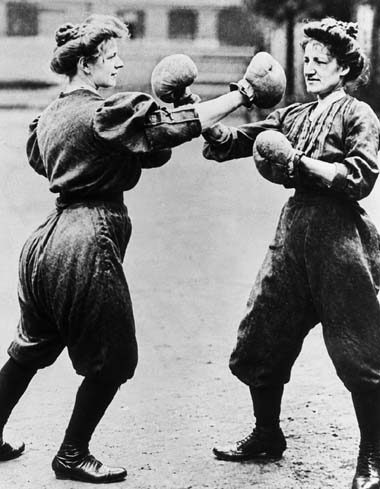
They were not competing for gold, silver, or bronze;
they were there as a demonstration event, an exhibition meant to entertain
rather than to establish a athletic standard.
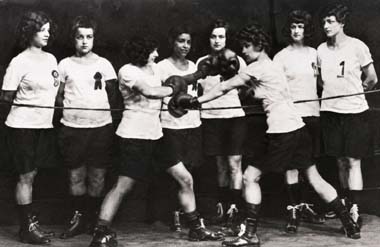
The crowd watched with a mix of curiosity and
amusement.
In 1904, society viewed women's boxing as a novelty
act or a vaudeville routine rather than a legitimate sport.
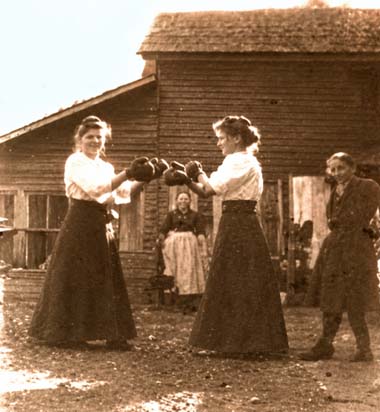
While the men battered each other for official
Olympic glory, the women's bouts were quickly relegated to a historical
footnote.
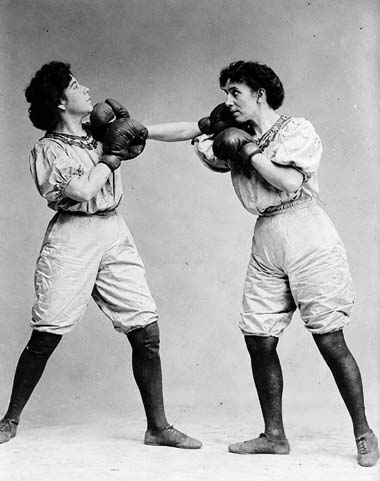
Instead of launching a new era for female
athletes, the ring doors slammed shut. The International Olympic Committee (IOC)
and amateur boxing governing bodies routinely banned women from official
competition, viewing the sport as too dangerous and "unladylike."
In 1923, the first female boxer Jeanne La Mar
Jeanne LaMar, obtain a
boxing license in the state of New Jersey.
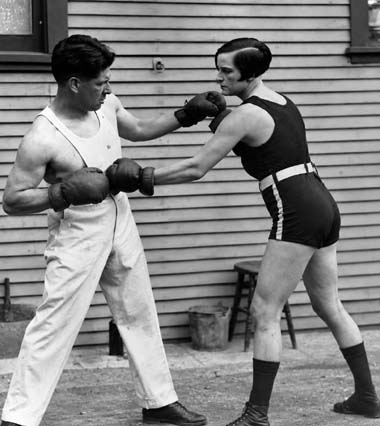
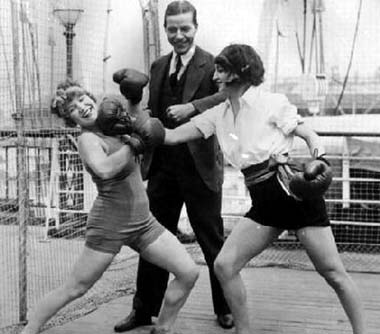
For decades, women’s boxing survived only in the
underground circuits, unsanctioned, and sideshows. It wasn't until the
1970s that the movement for legitimacy was beginning to actually take it more
seriously.
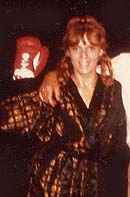
Legend in the Past Barbara Buttrick
In the mid- 1970s there was an attempt through a women's boxing magazine (more
like a booklet) that put out a survey to see if boxing fans were ready to see
women boxers in the Olympics.
During this decade, many trailblazers fought for the right to box, fight more
than four rounds, have it legal to fight in certain states of the United States,
and difficulty applying for boxing licenses throughout many of the states.
The road from that brief exhibition in St. Louis to official Olympic recognition
would ultimately take 108 years.
The historic breakthrough culminated at the London 2012 Olympic Games. More than
a century after women first demonstrated their skills in St. Louis, female
fighters finally stepped into the Olympic ring to compete for official medals.
Nicola Adams of Great Britain, Katie Taylor of Ireland, and Claressa Shields of
the United States became household names, capturing the first-ever Olympic gold
medals in their respective weight classes.
What began as a World's Fair novelty on a late September day in 1904 evolved
into a fierce, century-long battle for equity, proving that the toughest fight
for women boxers was simply being allowed into the ring.
WBAN / IWBHF
WBAN Instagram
WBAN Facebook
WBAN / IWBHF
WEBSITES
www.womensboxing.org
www.wbanmember.com
www.floridaboxing.com
www.iwbhf.com
WBAN's
Group Facebook